FairwayLeo
How much room is left in orbit.
Services
Brand Strategy, Visual Identity, Product & Interface Design, Front-End Development
Result
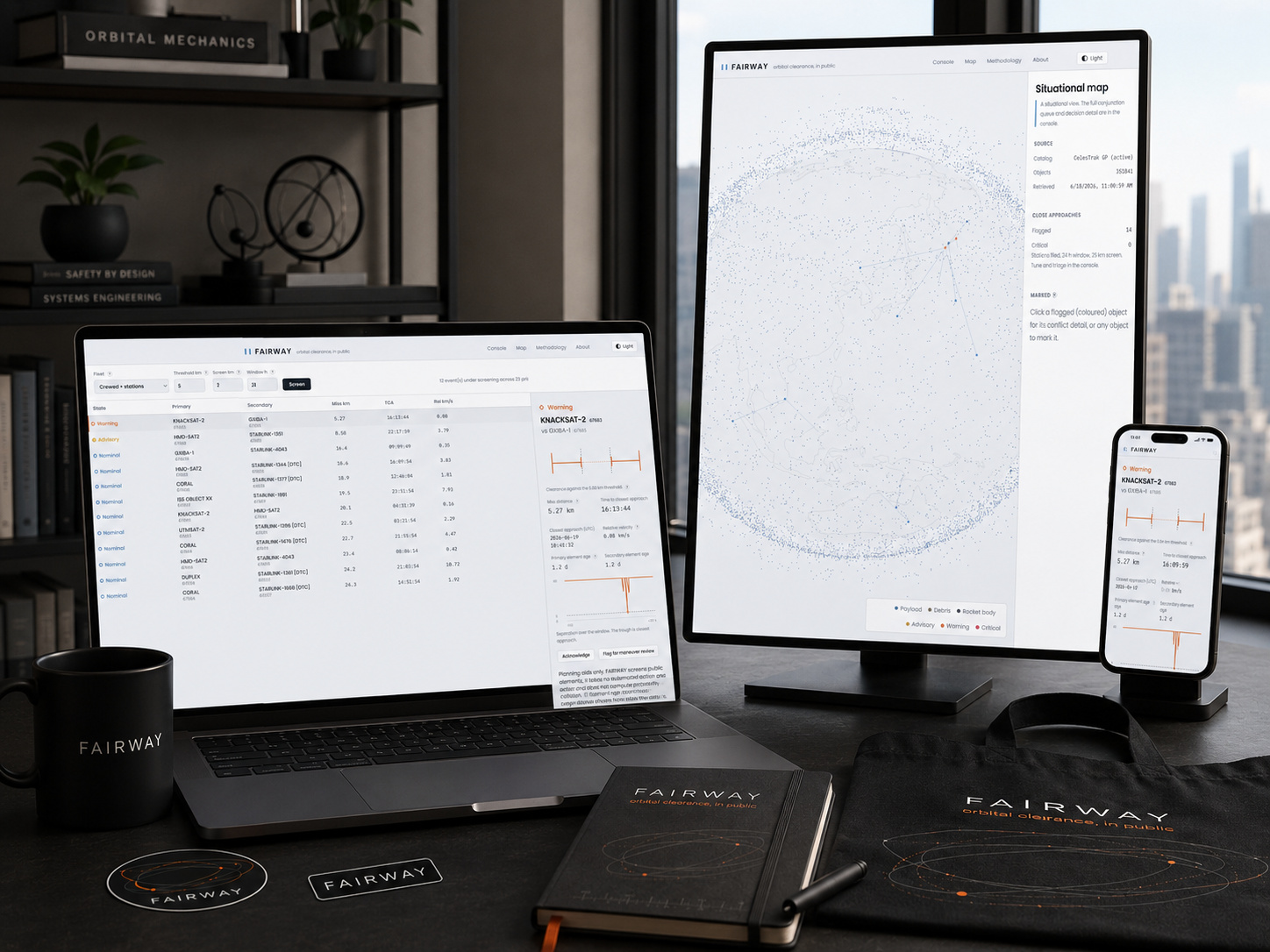
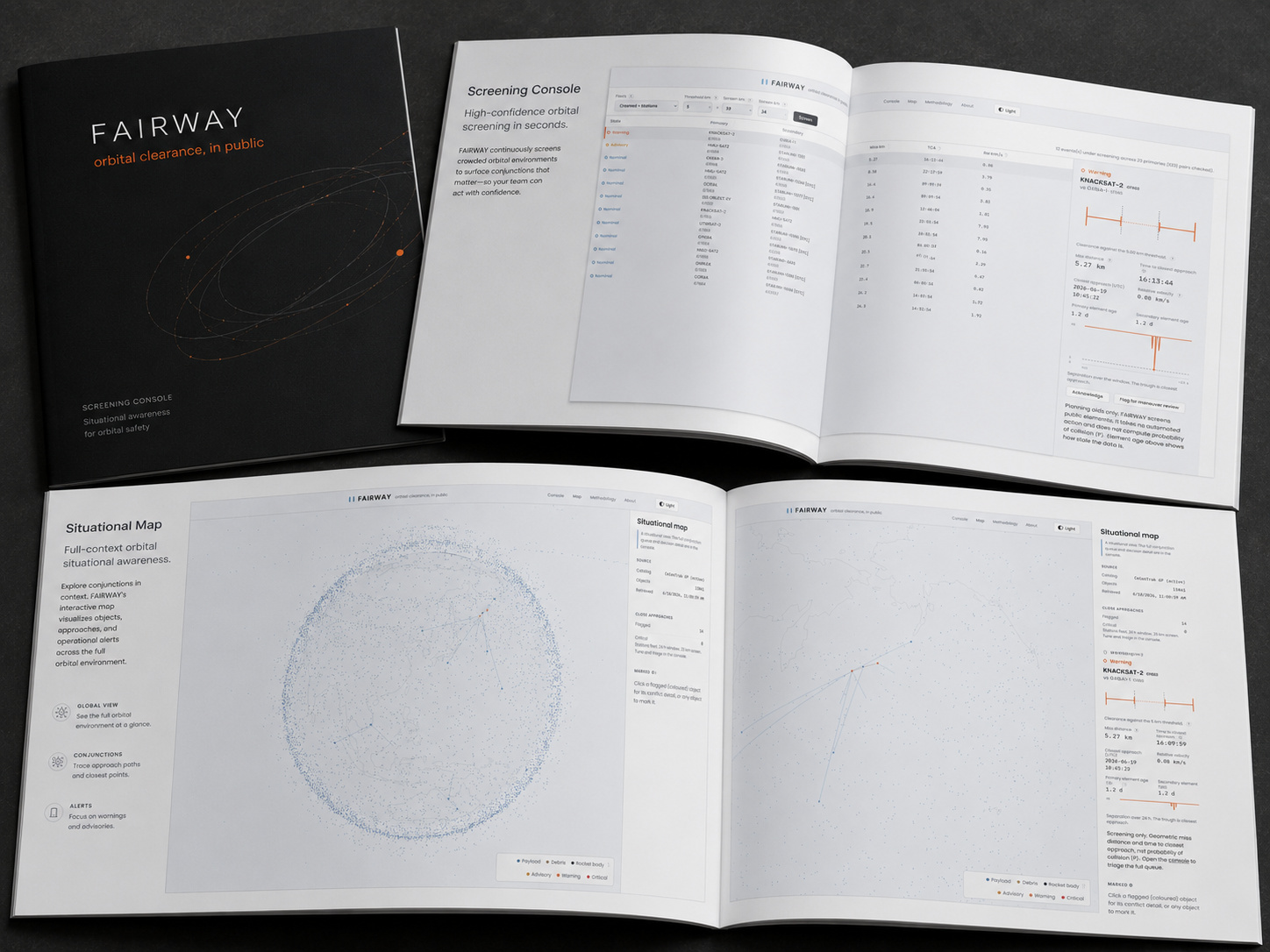
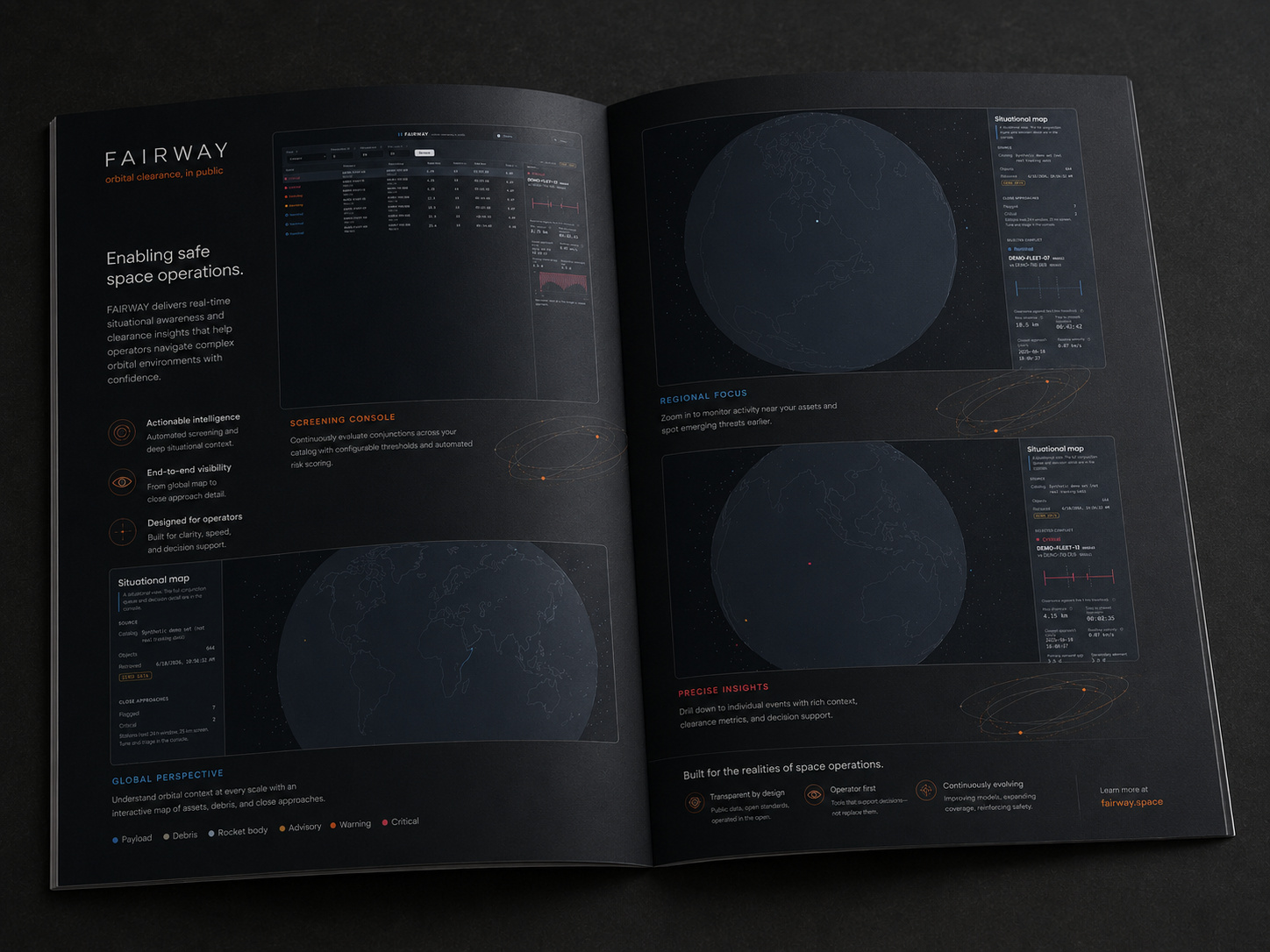
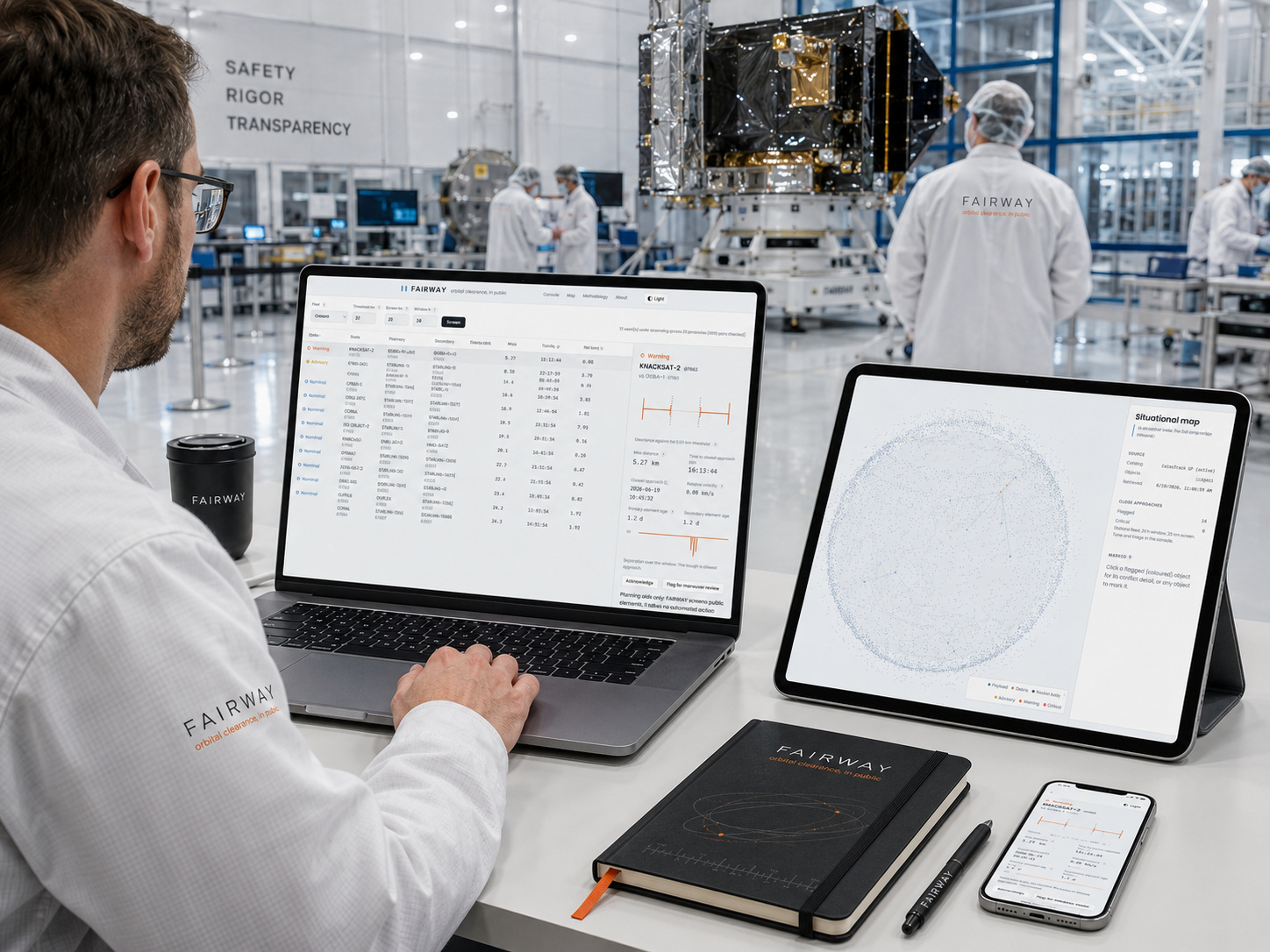
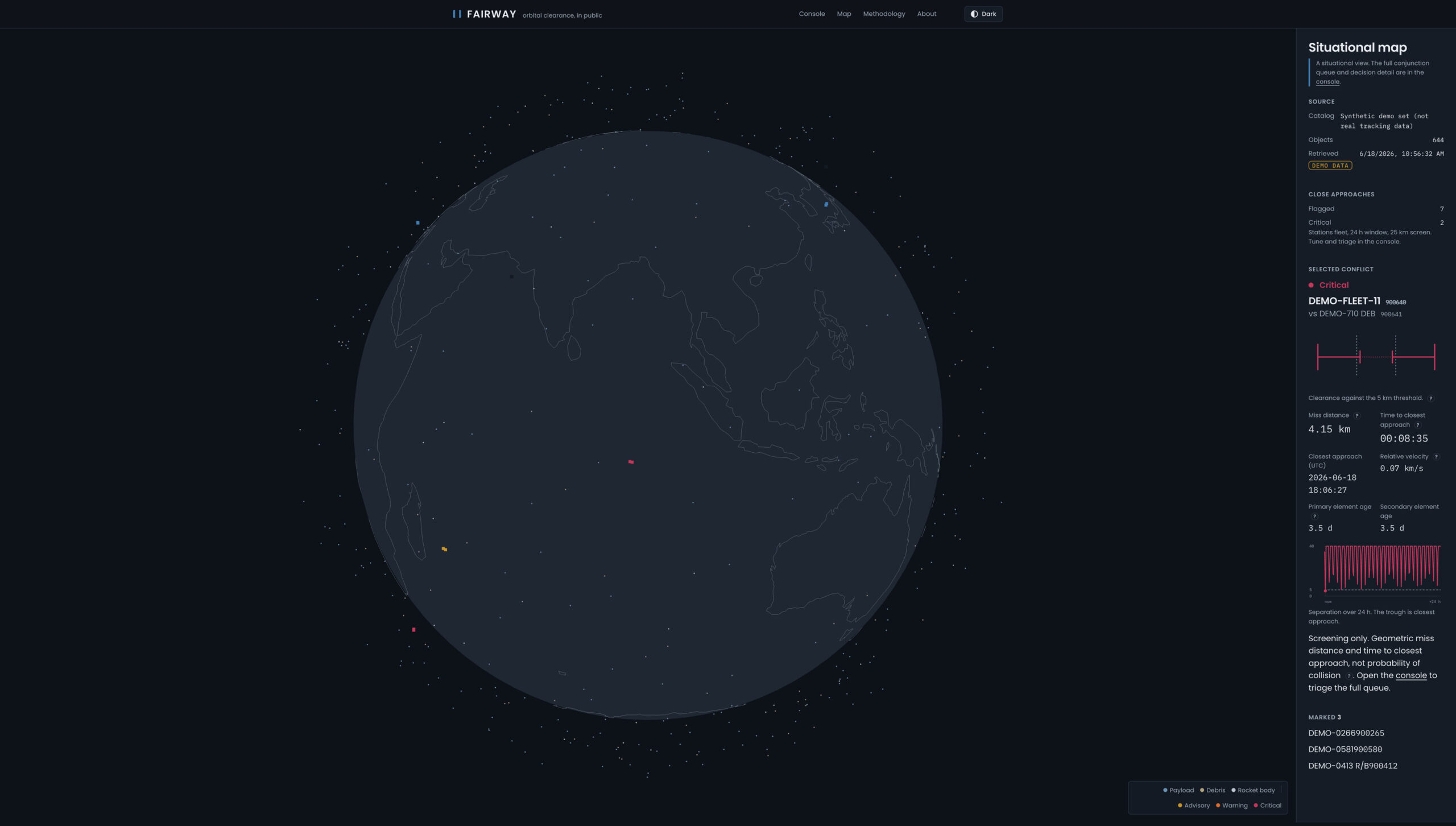
A live, public console that reads open orbital data and turns it into one calm call: hold, or move. It shows its own uncertainty on every screen, so you know exactly how far to trust it.
FairwayLeo is something I built on my own time. It screens close approaches between objects in low Earth orbit, the near-misses operators have to watch for. Screening for these has been part of the job for years. What changed is the volume. Tracking networks now follow tens of thousands of objects bigger than 10 centimeters, and the number of avoidance moves has gone from rare to hundreds of thousands a year. Every active satellite keeps asking the same question: is this one going to be a problem, and do I burn fuel to move out of the way?

The premise is simple: orbit is a shared commons, not a cockpit. If clearance can be measured from public data, it can be shown honestly and in the open, with every figure carrying its source and the moment it was true. FairwayLeo is built to show its work, and to never claim more certainty than the open data allows.
Most of that decision happens in tools the public never sees. I wanted to know what it would feel like as a calm, well-built instrument instead of a wall of numbers, so I made one. FairwayLeo pulls public catalog data, finds the conjunctions that matter, and lays each one out as a simple read: how close, how soon, how fast, and how stale the data behind it is.
The part I care about most is the honesty. It does not pretend to compute a probability of collision or tell anyone to fire a thruster. It is a screening aid that shows its own limits, because the fastest way to lose trust in a tool like this is to let it sound more certain than it is. I designed it and built the front end myself.